

.png)

.png)
.png)
.png)

.png)


Create your digital product passports in no time and with minimal effort.




.png)

.png)
.png)










.png)
Equip each product with a QR code that opens instant tutorials, step-by-step guides / step-by-step instructions, and AI chat for that exact item. No app required, fewer mistakes, fewer returns, more confident use.
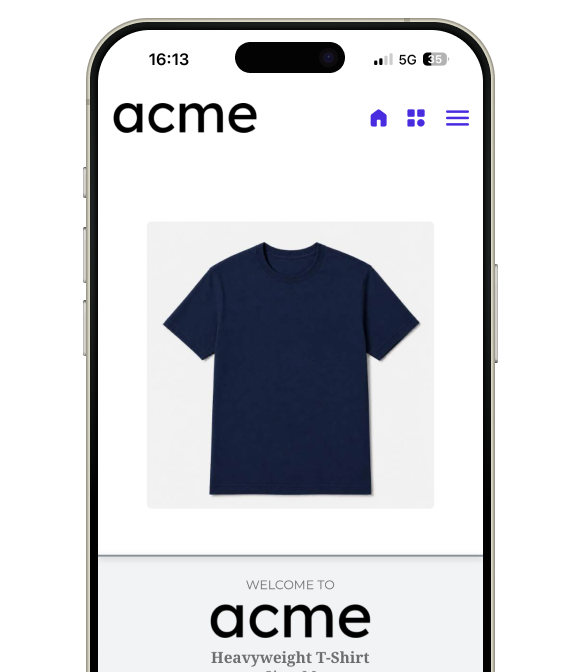
Link relevant products, surface promotions, and send QR traffic straight to your store for more clicks and more purchases.

.png)
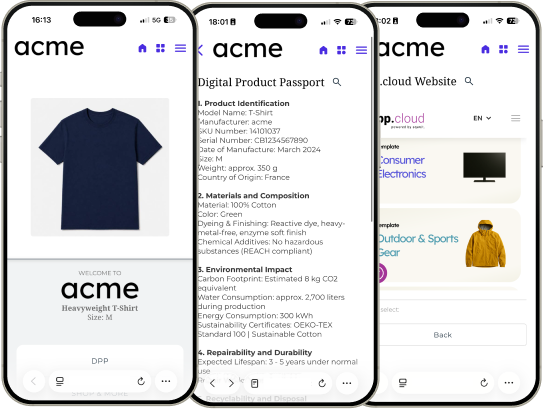
Every unit gets its own QR code with the exact data of that single item. Consumer scans, sees origin, materials, repairability and more. Authorities and recyclers get actual serial-number data, not generic product specs. This isn't compliance filler. This is transparency that works.
You pull the data from your software - we build the DPP. Setup takes about 2 weeks. After that it runs automatically with every new SKU.
.png)
Learn best practices to hit your goals with Digital Product Passports: better support & UX, compliant by design, higher sales, and product analytics. Want to make the most of your 30 minutes? Take the DPP Readiness Check first — it takes 90 seconds and gives both you and us a clear picture of where you stand before the call.
The Digital Product Passport (DPP) is highly relevant because it is both a key innovation and a core component of the EU’s Ecodesign for Sustainable Products Regulation (ESPR) of 2024.

The introduction of the Digital Product Passport (DPP) imposes comprehensive technical, procedural, and legal requirements on companies across the entire value chain.
Learn more
The Digital Product Passport (DPP) is often seen as a compliance exercise.
Learn more.png)
With the Ecodesign for Sustainable Products Regulation (ESPR), the Digital Product Passport (DPP) becomes a key driver of Europe’s sustainability policy.
.png)
The Digital Product Passport (DPP) is highly relevant because it is both a key innovation and a core component of the EU’s Ecodesign for Sustainable Products Regulation (ESPR) of 2024.
The introduction of the Digital Product Passport (DPP) imposes comprehensive technical, procedural, and legal requirements on companies across the entire value chain.
Learn moreThe Digital Product Passport (DPP) is often seen as a compliance exercise.
Learn moreWith the Ecodesign for Sustainable Products Regulation (ESPR), the Digital Product Passport (DPP) becomes a key driver of Europe’s sustainability policy.
The Digital Product Passport (DPP) will change how manufacturers organize product data, sustainability, and after-sales. This white paper provides clear answers:
• What a DPP must contain
• Which products are affected—and from when
• How to get your teams and tools ready now
You will also receive updates on EU regulations from Brussels directly in your inbox.
.jpg)
The Commission missed its own deadline for the battery passport access rules, but the passport deadline stays. Here we sort out what is already settled, what isn't, and how to build the restricted layer so it still works once the final rules arrive.
Learn more.jpg)
The EU registry has been live since July and its rules have applied since 6 August 2026. Before you can register a single passport, your company has to be verified through eIDAS. We walk through the process, what the automatic checks prove and who may register for you.
Learn more.jpg)
Since 27 September 2026, generic claims like “eco-friendly” need recognised excellent environmental performance, and sustainability labels need a certification scheme or a public authority behind them. We look at what changed and where the Digital Product Passport helps, and where it doesn’t.
Learn more
The battery passport is the first Digital Product Passport the EU actually requires. We explain which batteries need one, what the Commission's 71 data points cover and which rules are still missing five months before the deadline.
Learn more